If you’ve heard the words “dry needling” and felt a flicker of curiosity mixed with mild apprehension — you’re not alone. It’s one of the most commonly misunderstood treatment techniques in physiotherapy, and the questions I hear most often are always the same: Is it the same as acupuncture? Does it hurt? And does it actually work?
This article answers all of those questions honestly, without the jargon. By the end, you’ll know exactly what dry needling is, why physiotherapists use it, and what your first session will actually feel like — so that if it’s the right treatment for you, you can walk in with confidence rather than apprehension.
What Exactly Is Dry Needling?
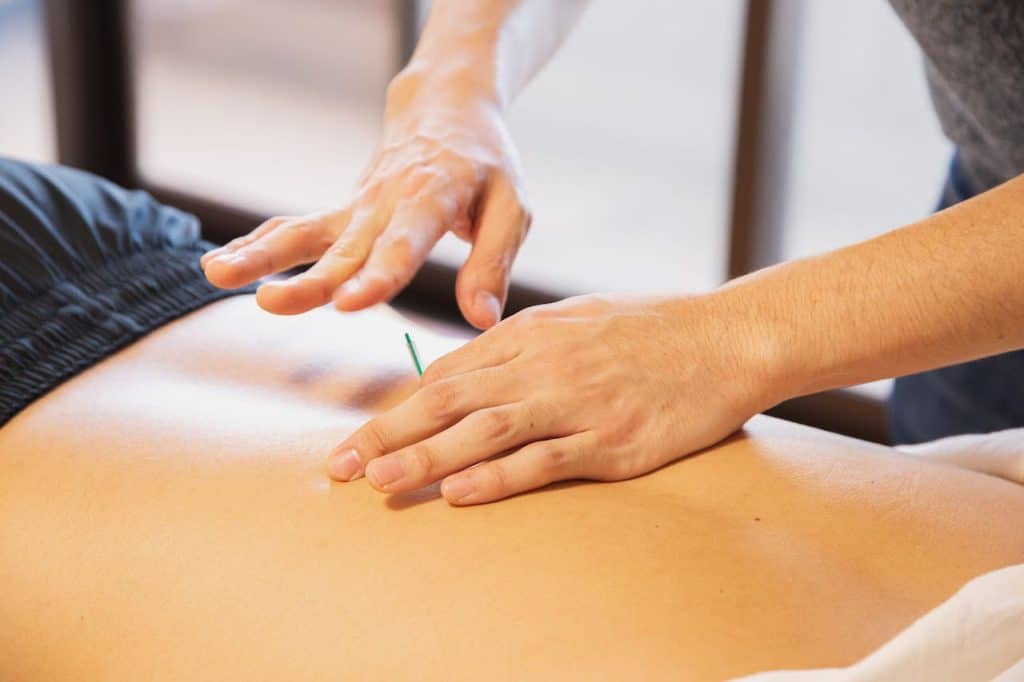
Dry needling is a physiotherapy technique that uses thin, sterile filiform needles — the same type used in acupuncture — inserted directly into muscle tissue to release tension, reduce pain, and restore normal movement. The word “dry” simply means that nothing is injected through the needle. No medication, no fluid — just the needle itself doing the work.
The technique targets what are known as myofascial trigger points — tight, hypersensitive knots within muscle fibres that can cause localised pain, referred pain in other areas of the body, restricted range of motion, and a persistent sense of tightness that stretching alone doesn’t seem to resolve. If you’ve ever had a massage therapist press on a sore spot in your shoulder and felt pain shoot down your arm, you’ve experienced a trigger point in action.
Dry needling works by inserting the needle directly into that trigger point. The needle creates a small mechanical disruption within the knotted tissue, which triggers a local twitch response — a brief, involuntary contraction of the muscle fibres. This response signals the nervous system to release the tension held in that area, increases blood flow to tissue that was previously starved of adequate circulation, and sets in motion a physiological cascade that reduces local and referred pain.
Is Dry Needling the Same as Acupuncture?
This is probably the most common question, and it’s a fair one — the needles look identical, so the confusion is understandable. But the two practices are quite different in their underlying philosophy, training, and intended mechanism of action.
Acupuncture is rooted in traditional Chinese medicine. It works along a system of meridians — channels of energy flow through the body — and needles are placed at specific points along those meridians to restore balance and treat a wide range of health conditions, including non-musculoskeletal concerns like digestive issues, stress, and insomnia.
Dry needling is grounded entirely in Western anatomy and neuroscience. Physiotherapists who use it are targeting specific muscle groups and trigger points identified through clinical assessment, with a clear understanding of the underlying musculoskeletal anatomy. The goal is always a specific, measurable outcome: releasing a tight muscle, reducing referred pain, restoring a restricted movement pattern.
In short — same needle, very different map. As a physiotherapist, when I reach for a needle, I’m working from a diagnosis of what’s happening in your tissue and why. The needle placement is precise and anatomically informed, not based on energy pathways.
“Dry needling and acupuncture use the same tool the way a scalpel is used in both surgery and carving — the instrument is identical; the training, purpose, and precision behind it are entirely different.”

Lucus Leung
- Lucus Leung, B.Physio (Hons), Founder of Alpine Rehab and Performance
What Conditions Does Dry Needling Treat?
Dry needling is most effective for conditions involving muscle tension, trigger points, and the referred pain patterns they create. It’s not a standalone cure, but used as part of a broader physiotherapy treatment plan it can significantly accelerate progress in cases that have plateaued with other techniques alone.
The conditions I most commonly treat with dry needling include chronic neck and upper back tension — particularly in people who spend long hours at a desk — lower back pain with associated glute and leg referral, shoulder impingement and rotator cuff-related dysfunction, tension-type headaches driven by suboccipital and upper trapezius trigger points, hip flexor tightness and ITB-related knee pain in runners, and calf tightness and Achilles tendon issues in athletes.
It’s also particularly useful in post-surgical rehabilitation, where scar tissue and protective muscle guarding can create persistent tightness that manual therapy alone struggles to penetrate. In those cases, dry needling can break through a plateau in a way that changes the entire trajectory of recovery.
When Is Dry Needling Not Appropriate?
Dry needling isn’t suitable for everyone, and a thorough assessment always comes before any treatment decision. It’s generally NOT USED used over areas of active infection, broken skin, or directly over joints with acute inflammatory conditions. Patients with certain bleeding disorders, those on anticoagulant medication, or those with a needle phobia that cannot be managed will be offered alternative techniques. Pregnancy requires careful consideration of needle placement, though dry needling can often still be used with appropriate modifications.
The point here is that dry needling is always a clinical decision made after a proper assessment — not a default treatment applied to everyone. If it’s not right for your situation, there are other effective techniques available, and a good physiotherapist will always take that route instead. Learn more about our full range physiotherapy options here.
What Does a Dry Needling Session Actually Feel Like?
Let’s be honest about this, because patients deserve a clear answer rather than a vague reassurance that it’s “just a little prick.”
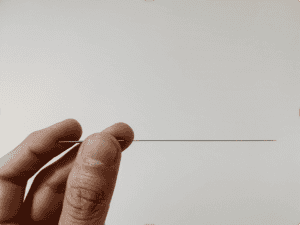
The needle itself is extremely fine — far thinner than the hypodermic needles used for injections or blood tests, which are hollow and much wider. Most people feel very little during insertion. What you do feel — and this is important to know about in advance — is the local twitch response.
When the needle contacts a trigger point accurately, the muscle often responds with a brief, involuntary twitch — a fast contraction that lasts a fraction of a second. This can feel anything from a mild ache or cramping sensation to a sharper, more intense feeling, depending on how reactive the trigger point is. Most people describe it as a deep, satisfying release — uncomfortable in a way that immediately feels productive, like the moment when a knot finally lets go under firm pressure.
The sensation passes quickly. Once the twitch has occurred and the trigger point has released, most patients describe a feeling of heaviness or warmth in the treated area — the result of increased blood flow to tissue that was previously held tight. Soreness for 24 to 48 hours after treatment is common and expected. It’s similar to the muscle soreness felt after a deep tissue massage, and it resolves on its own. Gentle movement and staying well hydrated both help.
Good to know: The intensity of the twitch response tends to reduce significantly with each subsequent treatment as trigger points are progressively resolved. First sessions are almost always the most intense — which is worth remembering if you’re nervous going in.
How Many Sessions Will I Need?
This varies considerably depending on how long the trigger points have been present, how reactive they are, and how the rest of your treatment plan is structured. Acute conditions — where a trigger point has developed recently in response to a specific incident — often respond in two or three sessions. Chronic cases, where trigger points have been established for months or years, typically take longer to resolve and benefit from dry needling being integrated into an ongoing physiotherapy plan alongside exercise rehabilitation.
It’s also worth understanding that dry needling treats the symptom — the trigger point — but not necessarily the root cause of why that trigger point developed. A muscle that is chronically overloaded due to a movement imbalance, postural habit, or weakness elsewhere in the kinetic chain will continue to re-develop trigger points unless the underlying cause is addressed. This is why dry needling works best as part of a complete treatment plan that includes exercise prescription targeting the source of the problem, not just the site of pain. Feel free to give us call and just have a chat with Lucus about the issue you are facing, and see how he can help. You are not alone !
Does the Evidence Support Dry Needling?
Yes — with some important nuance. The evidence base for dry needling has grown substantially over the past two decades, and there is good clinical evidence supporting its effectiveness for reducing myofascial trigger point pain, improving range of motion, and reducing the intensity and frequency of referred pain patterns.
Where the evidence is less settled is in understanding exactly which mechanism drives the results — whether it’s primarily the mechanical disruption of the trigger point, the neurological effect of the twitch response, or the effect of increased local blood flow and tissue repair. In practice, the mechanism matters less than the outcome, and the outcomes in clinical settings are consistently positive when dry needling is used appropriately and as part of a broader treatment approach.
What the evidence does consistently show is that dry needling used in isolation — without exercise rehabilitation, manual therapy, or addressing the underlying cause of trigger point formation — produces shorter-lasting results than when it’s integrated into a complete physiotherapy plan. It’s a powerful tool, not a standalone solution. Learn more about our full range physiotherapy options here.
Frequently Asked Questions
Is dry needling safe?
When performed by a qualified physiotherapist like Lucus Leung at Alpine Rehab and Performance with appropriate training in dry needling technique and anatomy, it is a very safe procedure. Sterile, single-use needles are used for every treatment and disposed of immediately after the session. Serious adverse events are extremely rare. Minor side effects — local soreness, small bruising at needle sites, and brief light-headedness — are relatively common and resolve quickly. Your physiotherapist will always conduct a full assessment to confirm that dry needling is appropriate for you before proceeding.
Will I feel the needle going in?
Usually very little. The needles used in dry needling are extremely fine — much thinner than an injection needle. Most people feel minimal sensation during insertion. What you will feel is the local twitch response when the needle contacts a trigger point — a brief ache, cramping, or deep pressure sensation that passes quickly. Many patients describe this as an intense but immediately satisfying feeling of release.
Can I execise after a dry needling session?
Gentle movement is encouraged — it helps increase blood flow to the treated areas and can reduce post-treatment soreness. However, intense exercise or heavy loading immediately after a session is not recommended, as the treated muscles are in a reactive state. Light walking, gentle stretching, and your prescribed rehabilitation exercises are all appropriate. Your physiotherapist will give you specific guidance based on what was treated and the intensity of your session.
Is dry needling covered by Medicare or private health insurance?
Dry needling delivered by a physiotherapist as part of a physiotherapy session is covered by private health insurance with extras cover — it falls under physiotherapy, not as a separate item. Medicare CDM plan sessions also cover physiotherapy treatment, which can include dry needling. It is not billed as a standalone item separate from the physiotherapy consultation — it’s a technique used within the session. More about our funding options here.
I'm nervous about needles — should I still consider dry needling?
A mild nervousness about needles is very common and is not a barrier to dry needling in most cases. The needles look and feel very different from injection needles, and many people with a general dislike of needles find dry needling much more manageable than they expected. Always let your physiotherapist know about your concerns before the session — the approach can be adjusted to make you as comfortable as possible, starting very gently to build familiarity. If needle phobia is significant, there are alternative manual therapy techniques that achieve similar outcomes.
The Takeaway
Dry needling is one of the more effective tools available in physiotherapy for addressing stubborn muscle pain, referred tension, and movement restrictions that haven’t responded adequately to other approaches. Used correctly — after a thorough assessment, integrated into a complete treatment plan, and by a physiotherapist who understands both what the needle does and why your tissue needs it — it can be genuinely transformative for patients who have been living with persistent pain.
If you’ve been dealing with chronic tightness, recurring muscle pain, or a recovery that seems stuck at a plateau, it may be worth discussing whether dry needling is appropriate for your situation. The first step is always an assessment — not a needle.
Ready to Book Your Session?
Lucus offers dry needling as part of mobile physiotherapy sessions across the Gold Coast — no clinic visit required.
Lucas Leung
Physiotherapist & Personal Trainer – Founder, Alpine Rehab and Performance.
Lucus holds a Masters of Physiotherapy and is trained in dry needling, cupping, spinal manipulation, and a full range of evidence-based physiotherapy techniques. He offers mobile physiotherapy across the Gold Coast, with sessions available under Medicare, WorkCover, CTP, NDIS, and private health insurance.